
At the present time, what is that one business that is amongst the most profitable and also serves a cause worth contributing to?
Considering the immense support from the Government’s end in the form of policies and subsidies, it wouldn’t be wrong to say that Biogas is emerging as a game-changer in the renewable energy sector. In fact, with increasing demand for cleaner energy, now is the perfect time to set up your own biogas plant. In this guide, let’s dig deep into the crucial aspects of starting a biogas business.
What is Biogas?
Biogas is an energy-rich gas which is produced by anaerobic decomposition of biomass sources like agriculture residue, cattle dung, sugarcane press mud, municipal solid waste, sewage treatment plant waste, etc. Biogas mainly contains methane (~60%) and carbon dioxide (~40%), with small amounts of hydrogen sulfide. It can be used directly as fuel or purified by removing CO2 and H2S. Once compressed, it becomes Compressed Bio-Gas (CBG), which has over 90% methane—making it similar to natural gas in both composition and energy potential.
What is a Biogas Plant?
A biogas plant is a facility which is designed to break down organic waste in an oxygen-free environment, enabling anaerobic digestion.
Main Components of a Biogas Plant:
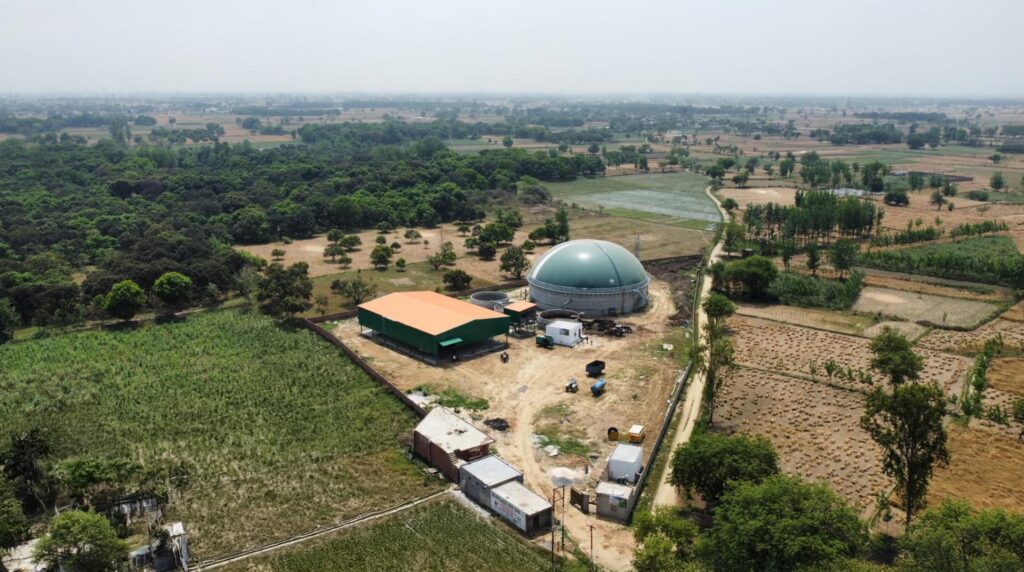
1. Reception Area – Where raw materials are collected and prepared for digestion. Common feedstocks include crop residues, sewage, agricultural waste, livestock manure, food-processing waste, and paper waste.
2. Digester (Fermentation Tank) – An airtight, waterproof chamber where raw materials break down to release biogas. Inside, agitators stir the mixture to release trapped gases and prevent layering. The digester also includes an outlet to remove digestate, a nutrient-rich byproduct used as organic fertilizer.
3. Gas Holder – A sealed container, usually made of steel, that collects and stores biogas during fermentation. It has an outlet that allows the gas to be used for energy and heat production.
For larger-scale operations, a biogas plant may have multiple digesters and gas holders to process higher waste volumes and produce more biogas efficiently.
The Working of a Biogas Plant
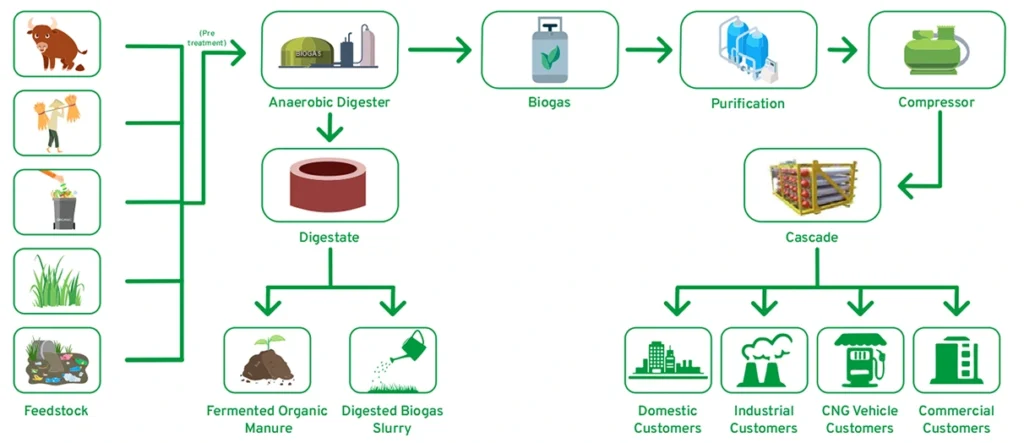
Biogas plants use a well-organized, automatic process to break down organic waste. This process happens in a special tank without oxygen, where tiny microorganisms help turn waste into useful biogas. The best part? It produces clean energy without adding extra carbon dioxide to the environment, making it a green and sustainable solution.
Feedstock Collection
Organic materials such as cattle dung, agricultural residue, kitchen waste, and municipal solid waste are collected and sorted. Feedstock with high moisture content and biodegradable properties is preferred.
Anaerobic Digestion
The collected feedstock is placed in a digester, an oxygen-free environment where microorganisms break down the organic material. This process produces biogas and a nutrient-rich slurry.
Biogas Purification
The raw biogas is purified to remove impurities like hydrogen sulfide and carbon dioxide. The result is CBG, which has energy content comparable to CNG (Compressed Natural Gas).
By-products Utilisation
The nutrient-rich slurry left after biogas extraction can be used as organic fertilizer, improving soil health and reducing the need for chemical fertilizers.
Usage of a Biogas Plant
Biogas plants serve multiple purposes, benefiting both the environment and the economy. They help generate clean energy all the while managing organic waste efficiently.
One of their main uses is producing carbon-neutral energy for electricity and heating. If the biogas is purified and compressed into biomethane, it can replace natural gas for homes, industries, and businesses. This fuel can also be transported to gas stations for use in vehicles.
As biogas is fully renewable, it doesn’t add extra carbon dioxide to the atmosphere when burned. Plus, by capturing methane from waste before it escapes into the air, biogas plants help reduce greenhouse gas emissions.
With minimal treatment, biogas can be used for cooking in households. It can also be used in power plants to produce electricity, or in combined heat and power (CHP) systems that generate both electricity and heat.
Larger biogas plants can supply power to entire communities by feeding electricity into the power grid. The heat generated during the process can also be used for heating buildings, swimming pools, or industrial facilities, making biogas a versatile and sustainable energy source.
Pros and Cons of Biogas Plants
Advantages:
- Renewable Energy Source – Provides sustainable energy for homes and industries, reducing reliance on fossil fuels.
- Lowers Carbon Emissions – Helps combat climate change by reducing greenhouse gas emissions.
- Waste Management – Converts organic waste into energy, reducing landfill use and associated pollution.
- Improves Air Quality – Controls methane emissions and reduces odors from decomposing waste.
- Natural Fertilizer Production – Generates digestate, a nutrient-rich alternative to synthetic fertilizers.
- Supports a Circular Economy – Enables industries to use their own waste for energy, enhancing sustainability.
- Job Creation – Expands employment opportunities in waste management, energy production, and related fields.
Disadvantages:
- High Initial Costs – Requires significant investment for installation and infrastructure.
- Maintenance Requirements – Needs regular upkeep to ensure efficiency and prevent system failures.
- Variable Efficiency – Biogas production depends on the type and quality of organic waste used.
- Temperature Sensitivity – In colder climates, additional heating may be necessary for effective fermentation, increasing costs.
To Conclude:
Setting up a biogas plant requires a significant investment. However, thanks to government initiatives, 70% of the project cost can be financed by authorized and recognized banks in India. With Green Vikalp LLP’s structured approach, all investments and interest are cleared by the third year, ensuring a profitable venture thereafter.
While biogas plants are still developing, advancements in technology can make them more cost-effective and scalable, leading to greater adoption and impact on reducing greenhouse gas emissions worldwide.
Why Choose Green Vikalp LLP?
At Green Vikalp LLP, we provide end-to-end (EPC) solutions, covering every aspect of biogas plant development with a proven track record. Our expertise has earned us recommendations from UPNEDA and Indian Oil, making us a trusted name for businesses and individuals looking to establish biogas plants.
Our leadership includes:
✔ Mr. Tamojyoti Mukhopadhyay – Former senior management at IOCL with over 20 years of experience, instrumental in the Panipat Refinery project.
✔ Mr. Ather Chauhan – The mind behind one of UP’s foremost biogas plants, specializing in innovative plant design and development.
Your dream biogas project—a profitable, green, and sustainable future for you and the nation—is just a call away! Take the first step today: 📞 92204 60390. Connect.